
The Eldoret tanker fire near Paul Boit on the Eldoret-Webuye road has once again forced Kenya to face a painful question: why do people run toward an overturned fuel tanker when they should be running away?
On the night of September 17, 2026, a petroleum tanker was involved in a road accident near Paul Boit Secondary School in Uasin Gishu County. People went to the scene and some attempted to collect fuel. The tanker later exploded, causing a mass casualty incident.
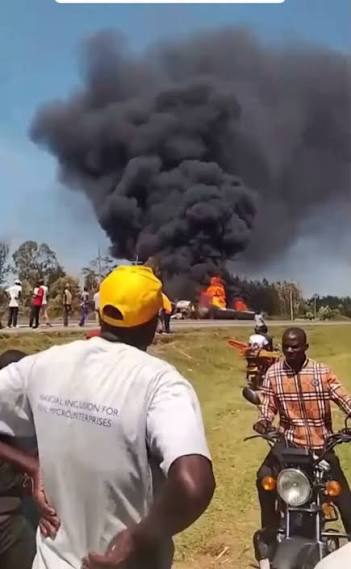
Early reports confirmed two deaths. The number later rose to three, while Uasin Gishu fire officials subsequently reported five deaths. Reports also showed that many survivors suffered serious burns and required hospital treatment. Moi Teaching and Referral Hospital received victims from the incident and activated specialist care for seriously injured patients.
This was not simply a road accident.
It was a public safety warning.
It was also a reminder of painful tanker disasters that Kenya has experienced before.
Most importantly, it should make every Kenyan ask one simple question:
How many more people must die before we change what happens around overturned fuel tankers?
The scene near Paul Boit became dangerous within minutes.
An overturned fuel tanker can look like an opportunity to someone who is struggling financially. A person may see spilled petrol and think about selling it, using it at home, or making quick money.
However, petrol is not ordinary liquid.
Its vapour can ignite. A small ignition source can turn a dangerous situation into a major fire. Therefore, people should never approach a damaged fuel tanker to collect fuel.
According to reports from the incident, people had gathered around the tanker before the explosion.
That decision changed many lives.
Some people who went to the scene expecting to collect fuel instead needed emergency medical care. Families that expected their loved ones to return home were suddenly waiting outside hospitals.
For some families, the phone call came too late.
For others, the long wait continues as injured relatives recover.
That is why this incident must not become another headline that disappears after a few days.
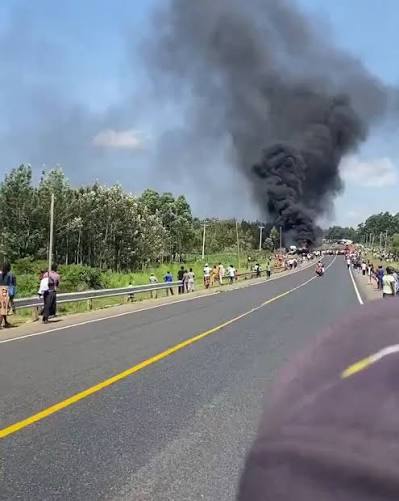
The tanker overturned after a road accident on the Eldoret-Webuye corridor.
Soon afterward, people gathered around the vehicle. Reports from the Moi Teaching and Referral Hospital said three people had died and 22 survivors had been received at the hospital on September 18.
Daily Nation reported 23 casualties and said 11 victims were in intensive care at that stage.
The hospital later continued treating seriously injured survivors.
Meanwhile, Uasin Gishu fire officials warned residents to stay away from tanker crash scenes. They said crowds can obstruct firefighters and create additional danger.
This is an important lesson.
When a fuel tanker crashes, the first priority should never be collecting fuel.
The first priority should be staying alive.
It is easy to look at a crowd and simply say, “These people are careless.”
However, the problem is more complex.
Poverty can play a role.
High living costs can also increase pressure on families. When someone sees valuable fuel flowing from a damaged tanker, the temptation can become very strong.
For a person who has little money, spilled fuel may look like free income.
Unfortunately, the price of that decision can be a life.
Still, poverty is not the only cause.
Other factors include lack of public education, poor understanding of fuel hazards, weak scene control, curiosity, crowd behaviour and the belief that an overturned tanker is safe after a crash.
There is also a dangerous habit of watching accidents closely.
Some people arrive simply because they want to see what happened. Others come with containers. Motorcyclists may carry people toward the scene. Before long, a small crowd can become hundreds of people.
Therefore, Kenya needs more than warnings after every tragedy.
The country needs continuous public education.
Kenya has seen this tragedy before.
One of the most painful examples occurred at Sachangwan in 2009. A fuel tanker overturned along the Nakuru-Eldoret highway, and large numbers of people gathered to collect fuel. The tanker later exploded.
The disaster killed and injured many people.
Different reports have recorded different final casualty figures over the years. However, the main lesson remains the same: gathering around spilled fuel can turn a road accident into a mass casualty disaster.
Kenya has also experienced other tanker incidents in different counties.
In 2021, a fuel tanker crashed at Malanga in Siaya County. People reportedly gathered around the tanker, and the subsequent explosion caused many deaths and serious injuries. The reported death toll increased as injured victims later died in hospital.
In 2022, police in Limuru dispersed people who had rushed to collect fuel after a tanker overturned at Kamandura.
In 2024, police and firefighters stopped people from siphoning fuel after another tanker overturned near Matayos in Busia County.
There have also been tanker crashes along the Eldoret-Webuye corridor and other major highways.
These incidents show a repeated pattern.
A tanker crashes.
Fuel spills.
People gather.
Someone starts collecting the fuel.
The danger increases.
Sometimes the fire never comes.
Sometimes firefighters arrive quickly.
Sometimes the tanker explodes.
That uncertainty is exactly why people must stay away.
The Eldoret tanker fire should not only be remembered as another accident.
It should become a public safety lesson.
When a tanker overturns, people nearby should immediately create distance.
Do not touch the vehicle.
Do not collect fuel.
Do not smoke.
Do not light a fire.
Do not use a motorcycle to carry people into the danger area.
Do not stand close to watch.
Instead, move away and warn others.
Then call the emergency services and give clear information about the location.
If you are driving, slow down safely and avoid blocking emergency vehicles.
Above all, allow firefighters, police officers, paramedics and other trained responders to control the scene.
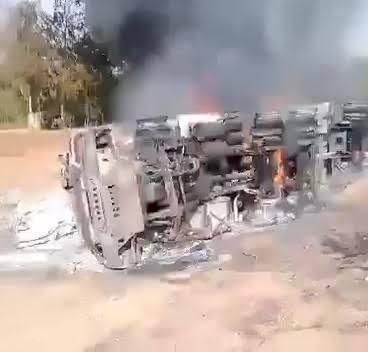
Firefighters should not have to fight a crowd before they can fight a fire.
They need space.
They need access.
They need accurate information.
They also need the public to follow instructions.
When emergency vehicles arrive, people should move away from the access route.
Road users should avoid blocking the road.
Members of the public should not argue with firefighters who are establishing a safety zone.
In addition, people should not interfere when firefighters use appropriate methods to control a petroleum fire.
Uasin Gishu fire officials have reported that members of the public have sometimes tried to interfere with firefighting operations because they want to collect fuel.
That behaviour puts everyone at risk.
Firefighters are not preventing people from getting free fuel.
They are trying to prevent more people from dying.
Many people understand that petrol burns.
However, fewer people understand how dangerous its vapour can be.
Petrol can produce vapour that mixes with air and can ignite when it reaches an ignition source.
The ignition source does not have to be a large fire.
Depending on the conditions, sparks, flames, hot surfaces or other sources of ignition can create serious danger.
That is why a person should never assume that fuel is safe simply because there is no visible flame.
A tanker may also contain a large quantity of petroleum product.
Consequently, the danger can extend beyond the exact place where the tanker overturned.
For that reason, trained emergency responders must assess the scene and establish a safe area.
One of the biggest lessons from Kenya’s tanker incidents is the importance of scene control.
A crash scene should not become a market.
It should not become a viewing area.
It should not become a place where people arrive with jerrycans.
Police, firefighters and other emergency teams need to keep people away from the hazard.
At the same time, members of the public have a responsibility to obey safety instructions.
Communities can also help.
If you see people moving toward an overturned tanker, warn them.
If you know that a tanker has crashed, tell children to stay away.
If someone wants to collect fuel, explain that the liquid may look valuable but the risk is much greater.
One person who turns away from the tanker may save a life.
Motorcycle riders are often among the first people to reach road accidents.
That gives them an important role.
However, carrying crowds toward a tanker accident can make the situation worse.
Instead, boda boda riders can become safety messengers.
They can help move people away.
They can guide emergency vehicles through traffic.
They can report the exact location of the accident.
They can warn other riders not to approach the tanker.
Most importantly, they can refuse to transport people who want to collect spilled fuel.
That simple decision can prevent another tragedy.
Paul Boit Secondary School is a reminder that schools can be located close to busy transport routes.
Students need to understand what to do when a fuel tanker crashes nearby.
Teachers can teach a simple rule:
Do not run toward the accident. Move away. Tell an adult. Follow instructions.
Schools can also include tanker safety in fire drills and emergency education.
Children should learn that spilled fuel is not a prize.
They should learn that an overturned tanker is an emergency scene.
Parents should teach the same lesson at home.
A child who understands this danger may stop another child from making a deadly mistake.
Kenya needs action before the next tanker crashes.
First, public education should become continuous.
Government agencies, counties, schools, transport companies, firefighters and community organisations can work together to teach tanker safety.
Second, high-risk highway areas should have clear emergency response plans.
Third, emergency access routes must remain open.
Fourth, tanker operators should follow road safety requirements and ensure their vehicles are properly maintained.
Fifth, authorities should strengthen enforcement around dangerous behaviour at crash scenes.
Sixth, communities should know the emergency numbers used in their areas.
Seventh, fire and rescue services need the equipment, training, staffing and resources required to respond quickly.
Finally, every tanker crash should be studied.
The goal should not only be to find someone to blame.
The goal should be to learn.
What happened?
Why did the tanker overturn?
Why did people gather?
How long did emergency teams take to arrive?
Was the road accessible?
Was the crowd controlled?
What could have prevented the deaths?
Those answers can save lives in the next incident.
The painful part is that Kenya already knows the danger.
The country has seen tanker crashes before.
The public has received warnings before.
Firefighters have spoken about the danger before.
Police officers have dispersed crowds before.
Yet people still gather.
That means the problem is no longer simply a lack of information.
It is also a problem of behaviour.
A warning only works when people act on it.
Therefore, every Kenyan should learn one simple rule:
When a fuel tanker crashes, do not go closer.
Not for petrol.
Not for curiosity.
Not for photographs.
Not to watch firefighters.
Not because someone else is doing it.
Move away.
There is another lesson that deserves attention.
After a tanker disaster, social media can quickly turn victims into jokes, insults or political arguments.
We should stop doing that.
People may have made a dangerous decision.
However, every person who died had a family.
Someone loved them.
Someone expected them home.
Someone may still be waiting for them.
Public safety education should tell the truth without humiliating the dead.
We can say that siphoning fuel is dangerous.
We can explain the consequences.
We can demand better safety.
At the same time, we can remember the victims with dignity.
The purpose of remembering them should be to prevent another family from receiving the same painful phone call.

Kenya is not alone.
Across Africa, fuel tanker crashes have caused major fires and mass deaths.
Nigeria has experienced several serious tanker disasters. In 2024, more than 140 people were reported killed in Jigawa State after a petrol tanker overturned and people gathered to collect fuel.
Uganda has also experienced deadly fuel truck explosions involving crowds gathering around spilled fuel.
Tanzania, South Sudan, the Democratic Republic of Congo and other African countries have also experienced major tanker fire disasters.
The details differ from country to country.
The pattern, however, is familiar.
A tanker crashes.
Fuel spills.
People gather.
Ignition occurs.
A local road becomes a mass casualty scene.
Africa must therefore treat tanker safety as a regional public safety issue.
We must talk honestly about poverty.
A person who has no food, no job or no money may see spilled fuel differently from someone who has everything.
That reality deserves attention.
However, poverty cannot make petrol safe.
Free fuel is still dangerous fuel.
Therefore, governments and communities should address the economic pressures that encourage risky behaviour while also making the dangers clear.
Public safety messages should not simply say, “Do not do it.”
They should explain why.
They should also provide strong emergency response and scene control so that people are not left standing next to dangerous tankers.
News organisations play an important role during tanker disasters.
They can help save lives by sharing safety information quickly.
Instead of only showing crowds around a tanker, reports can remind viewers:
Stay away from overturned fuel tankers.
Instead of focusing only on dramatic images, media reports can explain the danger of fuel vapour.
Instead of repeating rumours, journalists can wait for verified casualty information.
Responsible reporting can educate millions of people.
Social media creators have the same responsibility.
A tanker accident should not become entertainment.
Do not encourage people to visit the scene for views.
Do not share dangerous videos without a safety message.
Use every platform to teach.

Remember these five words:
Stop what you are doing.
Do not move toward the tanker.
Move away from the crash scene.
Create as much distance as possible.
Warn children, friends and other members of the public.
Tell them not to collect fuel.
Contact the appropriate emergency services and provide the location.
Give clear information.
Stay away and allow trained responders to work.
Do not return until authorities say the area is safe.
This simple rule can become part of public fire safety education across Kenya.
The next overturned tanker could happen on any major highway.
It could happen near a market.
It could happen near a school.
It could happen near a home.
It could happen while you are travelling.
You may be the first person to see it.
When that happens, your first thought should not be:
“How much fuel can I get?”
Your first thought should be:
“How do I stay alive and help others stay alive?”
That change in thinking can save lives.
A jerrycan of fuel may have a price.
A human life has no price.
Yet people sometimes risk their lives for a small amount of spilled fuel.
That is the tragedy we must understand.
The Eldoret tanker fire did not only destroy property.
It exposed a dangerous behaviour that Kenya has seen many times.
The answer cannot be another warning that disappears after a week.
We need stronger education.
We need better scene control.
We need safer roads.
We need prepared emergency services.
We need responsible tanker operations.
We need communities that understand fuel hazards.
Above all, we need people to stop treating overturned tankers as opportunities.
The people who died near Paul Boit should not become only names in a news report.
Their deaths should teach us.
Their families should not have to ask why another warning was ignored.
Their friends should not have to wonder whether the tragedy could have been prevented.
Their communities should not have to bury more people after the next tanker crash.
Kenya can learn.
Africa can learn.
We can change the culture around accident scenes.
When a fuel tanker overturns, we must move away instead of moving closer.
We must call for help instead of collecting fuel.
We must protect children instead of taking them to watch.
We must give firefighters space instead of blocking them.
We must value life more than spilled petrol.
That is the lesson.
That is the responsibility.
And that is the message every family, school, driver, boda boda rider, business owner and community leader should remember.
If a fuel tanker crashes, do not go closer. Move away. Warn others. Call for help. Stay alive.
Safety is love in action, every day, in every home.
