
When people talk about heroes, most think of doctors, soldiers, or teachers. But in Kenya, another kind of hero wears a helmet and holds a hose; the firefighter. One of the most inspiring of these heroes is Wako Abgudo, a man whose journey tells the story of the Kenya Fire Service Transformation, a decade change that turned a weak system into one that saves lives and gives hope.
Wako Abgudo started as a young firefighter in Isiolo, a dry and often windy county in Kenya. Fires were common but the fire service was small and under-resourced. The team had one truck that broke down frequently and no proper gear to protect them from heat or smoke. They had passion but not enough support.
Every time a fire broke out, Wako and his fellow firefighters rushed fearlessly to the scene, driven by duty and compassion. Yet there were days when they arrived too late—only to face the anger of desperate crowds, pelted with stones until they collapsed from exhaustion and hunger. Their pay came late and small, with no hope of increase, for all had no certificates to prove their worth.
At times, their old fire-engine would stall in the middle of roaring flames, leaving them helpless before the inferno they swore to fight. These struggles showed how badly Kenya needed change. Still, Wako believed that if they could get proper training and support, firefighters could protect their people better. His dream would soon become part of the transformation.
The turning point came when the Polish Centre for International Aid (PCPM) partnered with the Chief Fire Officers Association of Kenya (CFOA-K) and the Kenyan government to build a modern, sustainable firefighting system. Their mission went beyond short-term support—they aimed to transform Kenya’s fire service by training firefighters professionally, equipping them with modern skills, and restoring dignity and respect to the profession across the nation.
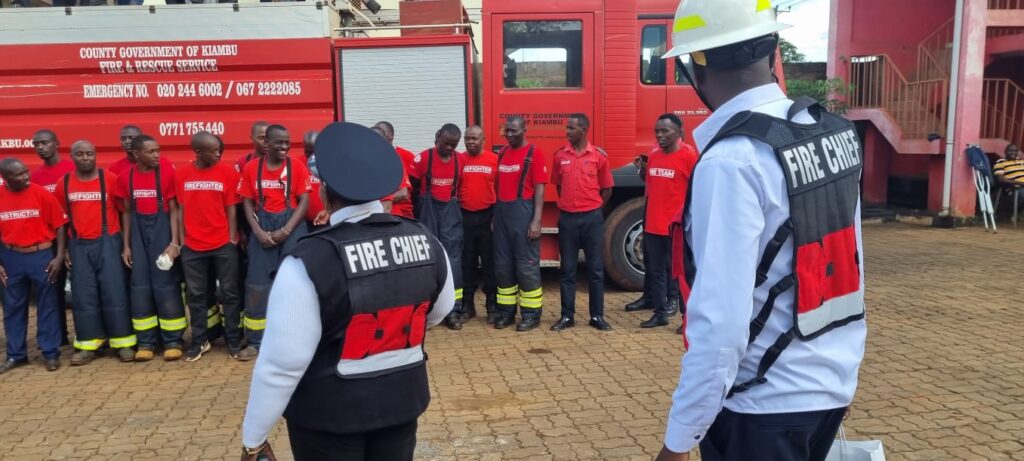
In 2014, PCPM began training sessions in different counties. Wako was among the first to join. He learned firefighting techniques, fire-safety protocols, rescue methods, how to use modern equipment, and how to plan responses to large fires. For the first time, firefighters were trained like professionals.
Wako later said that the training changed everything: “Before, we only knew what others showed us. Now we understand how to fight fires safely and save more lives.” This was the heart of the transformation; knowledge, practice, and confidence.
Before the transformation, firefighting in Kenya was a story of courage amidst hardship. Firefighters like Wako and his team in Isiolo worked with almost nothing. Many stations had no proper trucks; hoses leaked; protective suits were torn; helmets were rare. In several towns, people didn’t even know there was a fire station.
In Isiolo, Wako and his colleagues often slept beneath their only fire truck; it was their shelter from the scorching sun by day, the cold by night, and the rain during the wet season. Yet despite the struggles, they remained committed to their calling—to save lives and property with whatever little they had.
Then PCPM joined hands with CFOA-K and the Kenyan government. Their mission was not just to provide temporary relief, but to build something lasting—a modern, professional, sustainable fire service system that would stand the test of time. PCPM helped develop an official firefighting curriculum and supported construction of modern fire-stations, while helping counties acquire affordable and customised fire engines, water tanks, hoses, breathing apparatus, and other essential tools adapted to Kenya’s conditions.
For Wako and his fellow firefighters, this was more than a professional upgrade, it was a dream come true. They could now respond faster, enter burning buildings with confidence, and handle emergencies with modern tools and techniques. More importantly, their communities began to view them differently. They were no longer seen as labourers with leaking hoses, but as trained professionals, guardians of life and property, pillars of safety, and symbols of progress.
As the transformation was underway, Africa Fire Mission (AFM) also played a key role. Founded in 2012, AFM committed itself to increasing the sustainable capacity of fire-departments in Africa—including Kenya—through training, empowerment, support and encouragement.
In Kenya, AFM helped develop training materials, supported curricula, provided personal protective equipment (PPE) and communication tools, and ran fire-prevention and community education programs. For example, AFM’s “Active Bleeding Control” program trained community members and first-responders in Kenya in life-saving techniques beyond fire scenes.
And when Wako began taking part in cross-county trainings, symposiums and peer networks, AFM’s efforts helped open those doors. His leadership grew, not just from equipment and curriculum, but from the culture of ongoing training, community outreach and teamwork fostered by AFM’s partnership.
In the past, many people did not trust firefighters. They thought firefighters were slow, careless, or not serious. But once the transformation began, everything changed. People started to see firefighters as professionals and heroes.
Wako became one of the most respected officers in Isiolo. He was known for being calm, brave and kind. He taught children in schools about fire prevention and what to do during an emergency. He spoke on radio shows about home safety.
Thanks to Wako and others like him, people began calling the fire department sooner when emergencies happened. Communities worked with firefighters instead of blaming them. Respect replaced fear. One of the biggest successes of the transformation.
The training programs did more than teach technical skills—they built teamwork and connection across counties. Before the transformation, every county worked alone. There was no national system. But through PCPM, AFM and local leaders a united fire-service network started to emerge.
Wako trained with firefighters from Nairobi, Kiambu, Machakos, Garissa. They shared ideas, learned together, and formed a network of support. This cooperation is now one of the strongest parts of the transformation. Firefighters across Kenya now share knowledge, coordinate resources, and support each other like family.
As Wako’s experience grew, he became a leader. He began training new firefighters, passing on the lessons that changed his life. He reminds them that firefighting isn’t just a job, it’s service to the nation.
Wako’s leadership made him a symbol of the Kenya Fire Service Transformation. When people see him training others, they see the results of ten years of hard work and hope. His goal is to make sure that every firefighter in Kenya can work safely, confidently and proudly.
He often tells his students: “A good firefighter does not fear fire; he respects it and prepares for it.” That message has inspired many young men and women to join the service.
Even with progress, there are still challenges. Some counties have no proper fire stations or enough staff. Rural areas are hard to reach, water supply is sometimes poor, equipment can still be expensive, and climate change brings new dangers,wildfires, floods, storms.
Wako believes the transformation is still a work in progress. He says more investment, training and awareness are needed to reach all parts of Kenya. He also hopes more women will join the fire service, saying that bravery and strength come from the heart, not just muscles.
Despite the issues, he remains hopeful. “We have come from zero to something,” he says with pride. “If we keep going, we can go even higher.”
The impact of the transformation goes beyond fires. It has created jobs, inspired community service, saved families from tragedy. Firefighters are now trained in rescue work, road-accident response, even first aid.
Wako’s team has rescued people trapped in floods and helped during road crashes. They’ve worked with police, hospitals, schools to improve safety. Each mission builds stronger trust between firefighters and citizens.
The transformation also changed how counties plan their cities: fire-stations are being built near schools, markets, industrial areas; roads are being improved for fire-truck access. These are the hidden benefits of a safer nation.
To make fire-safety part of everyday life, education is key. Wako often visits schools with fire-trucks and teaches children how to respond when they see smoke or hear an alarm. He believes that if children learn early they will grow into adults who care about safety.
He says: “When people understand fire, they respect it. And when they respect it, they prevent it.” His simple words carry a powerful message about safety and responsibility.
In just ten years, Kenya has made progress once thought impossible. From old trucks and untrained crews to modern engines and professional firefighters, the Kenya Fire Service Transformation has changed the story of firefighting forever.
Wako Abgudo’s name is now known far beyond Isiolo. He represents every firefighter who worked in the hard times and never gave up. His story shows that with teamwork, education and commitment, change is possible even in toughest conditions.
Other African nations are noticing Kenya’s progress. They are learning from the model of Kenya’s fire service, proving that Kenya’s example can help others become safer too.
The future of Kenya’s fire service looks bright. More training centres are being built, technology is being used to make responses faster and smarter. Drones, mapping systems, emergency apps are helping firefighters find fire scenes quickly and plan better.
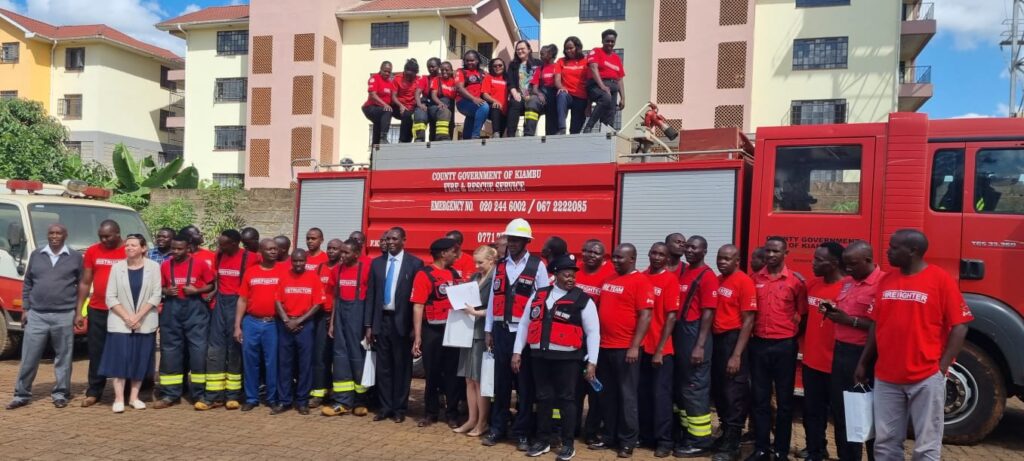
Wako dreams of a day when every county in Kenya has a fully equipped, well-trained fire team. He wants firefighting to be seen as a noble and respected career for both men and women.
“The Kenya Fire Service Transformation is just the beginning,” he says proudly. “Now we must keep learning, keep working, and keep saving lives.”
When you see Wako Abgudo in his uniform, you see more than a firefighter, you see a story of change, courage, community. From humble beginnings to becoming a leader, he is proof that real heroes are made through service.
He represents the heart of the Kenya Fire Service Transformation, a movement that brought pride back to firefighting in Kenya. His bravery has inspired others to take safety seriously and helped build a stronger, safer nation.
The Kenya Fire Service Transformation is one of Kenya’s greatest success stories. It shows what can happen when local heroes, government leaders and global partners work together for the good of the people.
From broken trucks and untrained crews to respected professionals and modern fire-engines, Kenya has come a long way. Wako Abgudo’s journey is the face of this change, a reminder that progress begins with passion, patience and purpose.
Today, as fire-trucks roar through Kenya’s towns, sirens echo not just danger but hope, the sound of a nation rising, one fire at a time.

2 Responses
This story has really given me courage since I am also a firefighter who still works under such unfriendly condition. Using old model fire engine, with small number of staff without enough protective gears. No budget from the County Government even after being in service for over 6 years. No trainings for the officers. Luckily all my colleagues are professional both trained by a credited institution in Kenya.