
Solar fires in Kenya are becoming an important fire safety concern as more families, schools, mosques, hotels, shops, farms and businesses use solar power. Solar energy provides many benefits. For example, people use it for lighting, refrigeration, water pumping, internet services, security cameras and mobile phone charging. However, solar equipment can create serious electrical and fire hazards when people install, operate or maintain it incorrectly.
Therefore, every Kenyan who uses solar power should understand basic solar fire safety.
Solar energy itself does not cause fires simply because it comes from the sun. Instead, problems such as poor installation, damaged cables, overloaded equipment, loose connections, faulty batteries and unsafe chargers can create dangerous conditions.
Furthermore, solar batteries can store large amounts of energy. As a result, a damaged battery can create intense heat, smoke and fire.
This article explains solar fires in Kenya, the main causes, common risks, prevention measures and safe actions during an emergency. It also explains what families, schools, mosques, hotels, businesses and communities should know about solar fire safety.
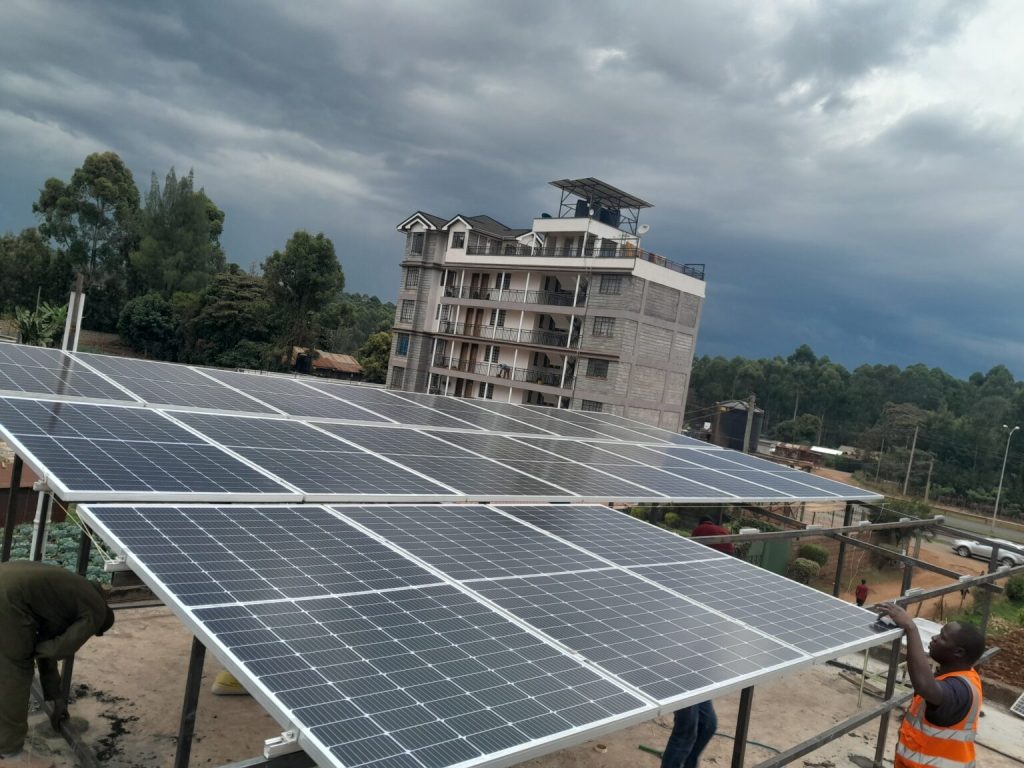
Solar fires in Kenya can develop for many reasons. First, an installer may select the wrong cable size. Next, a loose connection may create resistance and heat. In addition, an overloaded inverter may struggle to handle the electrical demand.
As a result, electrical components can become hot.
Over time, excessive heat can damage insulation and other materials. Eventually, the damaged equipment may produce sparks, smoke or flames.
Therefore, never ignore an electrical problem simply because the solar system still works.
A system can continue supplying electricity while developing a dangerous fault.
Solar power offers major benefits to Kenya.
First, it can provide electricity in areas without reliable grid power. Second, it can help families reduce their dependence on other energy sources. Third, it can help schools, businesses and community institutions continue important activities.
For example, a school can use solar power for lighting and computers. Similarly, a hotel can use solar energy for lighting, water pumping and other services.
However, every electrical system requires proper safety practices.
Therefore, solar growth must go together with fire prevention education.
Solar power can help families in many ways.
It can provide:
Moreover, solar power can provide useful energy in remote communities.
However, families must understand how their systems work.
For example, a small solar system may safely operate lights and phone chargers. However, the same system may not safely operate an electric kettle, iron, microwave and water pump at the same time.
Therefore, always understand the system’s capacity before adding appliances.
One of the most important safety issues involves installation.
A qualified professional should design and install the system.
Unfortunately, some customers choose an installer only because the price is low. Although saving money may seem attractive, poor installation can create expensive problems later.
For example, an installer may use:
Consequently, the system may develop heat and electrical faults.
Therefore, choose a competent installer and keep records of the installation.
Solar cables carry electrical energy.
Consequently, damaged cables can create serious hazards.
Inspect cables for:
If you notice damage, do not touch exposed wires.
Instead, keep people away and contact a qualified technician.
Furthermore, remember that solar panels can continue producing electricity when sunlight reaches them.
Therefore, damaged solar cables may remain electrically dangerous during daylight.
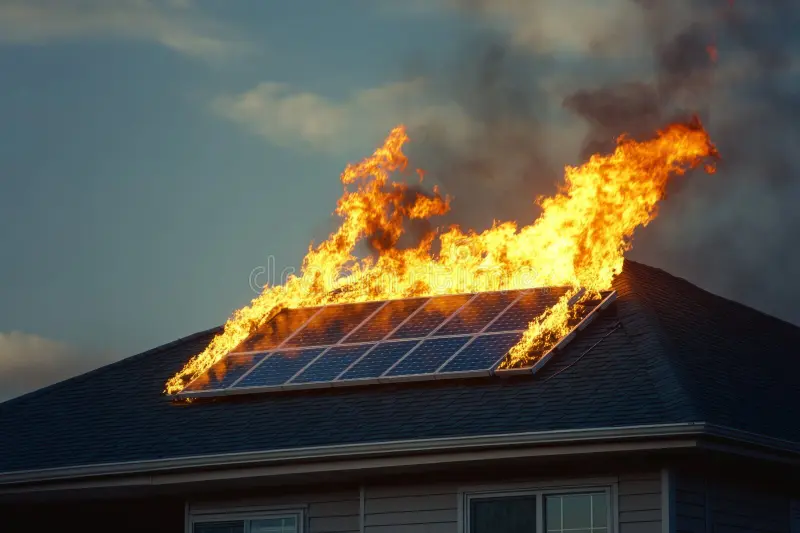
Batteries store energy.
That stored energy makes them useful. However, it also means that battery failures can create serious hazards.
Solar systems may use different battery types, including lead-acid and lithium-ion batteries.
Each battery type has different safety requirements.
Therefore, always follow the manufacturer’s instructions.
Do not guess how to install, charge, repair or modify a battery.
Lithium-ion batteries can store large amounts of energy in a relatively small space.
Consequently, they have become popular in many modern energy systems.
However, a damaged lithium-ion battery can experience thermal runaway.
Thermal runaway occurs when a battery cell heats up uncontrollably. The heat can trigger further chemical reactions inside the battery.
As a result, the battery may produce:
Therefore, never ignore a damaged lithium battery.
Watch carefully for warning signs.
For example:
If you notice these signs, act quickly.
First, keep people away.
Next, stop using the equipment if you can do so safely.
Then, contact a qualified professional or emergency service when necessary.
Do not open, puncture or repair a damaged battery yourself.
One of the biggest benefits of solar energy involves mobile phone charging.
Across Kenya, people use solar systems to charge phones at home, in shops, schools, offices, hotels and community facilities.
This service is valuable.
However, unsafe charging practices can create fire risks.
For example, a damaged charging cable can short-circuit. Similarly, a poor-quality charger can overheat.
A damaged phone battery can also become dangerously hot.
Therefore, use good-quality chargers and cables.
Never use a charger with exposed wires.
Also, never charge a phone under a pillow, blanket or pile of clothes.
Instead, place the phone on a hard, stable surface with good airflow.
Another common problem occurs when people connect too many appliances.
For example, a system designed for lights and phone charging may later power:
However, the original system may not support such a load.
Consequently, cables, batteries, inverters or other components may overheat.
Therefore, ask a qualified professional to check the system before adding high-power appliances.
The inverter plays an important role in many solar systems.
However, an inverter can develop faults.
Watch for:
If an inverter repeatedly shows faults, do not keep resetting it.
Instead, contact a qualified technician.
Furthermore, never cover an inverter with clothes, paper or other materials.
Keep ventilation openings clear.
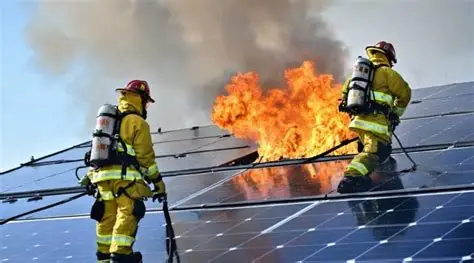
Solar fires in Kenya can affect homes in both urban and rural areas.
Families should know where their solar panels, inverter and batteries are located.
Parents should also teach children not to touch electrical equipment.
Keep batteries away from children.
Similarly, keep cables away from areas where people can damage them.
Do not place clothing, cardboard or other combustible materials around inverters and batteries.
Moreover, check the system regularly.
Early action can prevent a small electrical fault from becoming a major fire.
Schools increasingly use solar energy for lighting, computers, internet services and water systems.
However, schools also contain many children.
Therefore, school management must control access to solar equipment.
Students should not enter battery rooms without authorization.
Teachers and other staff should know:
In addition, schools should include electrical fire safety in their regular fire drills.
Mosques may use solar power for lighting, fans, sound systems, cameras, water pumps and other equipment.
Because many people may gather in one building, fire safety remains important.
Therefore, mosque management should keep electrical rooms clear.
Battery areas should not become storage rooms.
Furthermore, do not store paper, carpets, boxes or other combustible materials directly around electrical equipment.
Religious leaders can also help educate congregations about solar safety.
A short safety message can reach hundreds of people.
Hotels may use solar systems to support lighting, water pumps, refrigeration and other services.
However, guests may not know where the solar equipment is located.
Therefore, hotel staff need clear emergency procedures.
Staff should know where to find:
In addition, staff should know what information to give firefighters.
For example, if a battery room sits behind the kitchen, staff should tell responders immediately.
Small businesses may use solar power for lighting, refrigeration, phone charging and electronic equipment.
However, many shops also store combustible goods.
These may include:
Therefore, keep combustible materials away from electrical equipment.
Also, organize phone charging areas.
Do not allow damaged cables to remain in service.
Do not overload extension leads.
Most importantly, keep emergency exits clear.
Farmers use solar systems for water pumps, security lights and other equipment.
However, farms may also contain fuel, dry grass, chemicals and machinery.
Therefore, keep solar batteries and electrical equipment away from fuel storage.
Protect cables from animals.
Also, inspect outdoor equipment after storms or heavy farm work.
Furthermore, remove dry vegetation from around electrical installations.
Preventing solar fires in Kenya starts before the system begins operating.
First, choose qualified installers.
Second, use suitable equipment.
Third, select the correct cable sizes.
Fourth, install proper electrical protection.
Fifth, protect cables from damage.
Sixth, maintain batteries according to manufacturer instructions.
Seventh, inspect the system regularly.
Finally, educate everyone who uses the equipment.
These simple steps can reduce risk significantly.
Install batteries in a suitable location.
Follow the manufacturer’s instructions.
Keep batteries away from unnecessary heat.
Also, protect them from water and physical damage.
Keep children away from battery equipment.
Furthermore, do not store fuel beside batteries.
Keep cardboard, clothing, paper and other combustible materials away from the equipment.
Where the manufacturer requires ventilation, provide appropriate ventilation.
Many Kenyan homes and businesses use generators as backup power.
That can provide useful resilience.
However, fuel creates another fire hazard.
Therefore, never store petrol or diesel beside batteries, inverters or electrical panels.
Fuel vapour can ignite when it reaches an ignition source.
Store fuel safely and keep it away from electrical equipment.
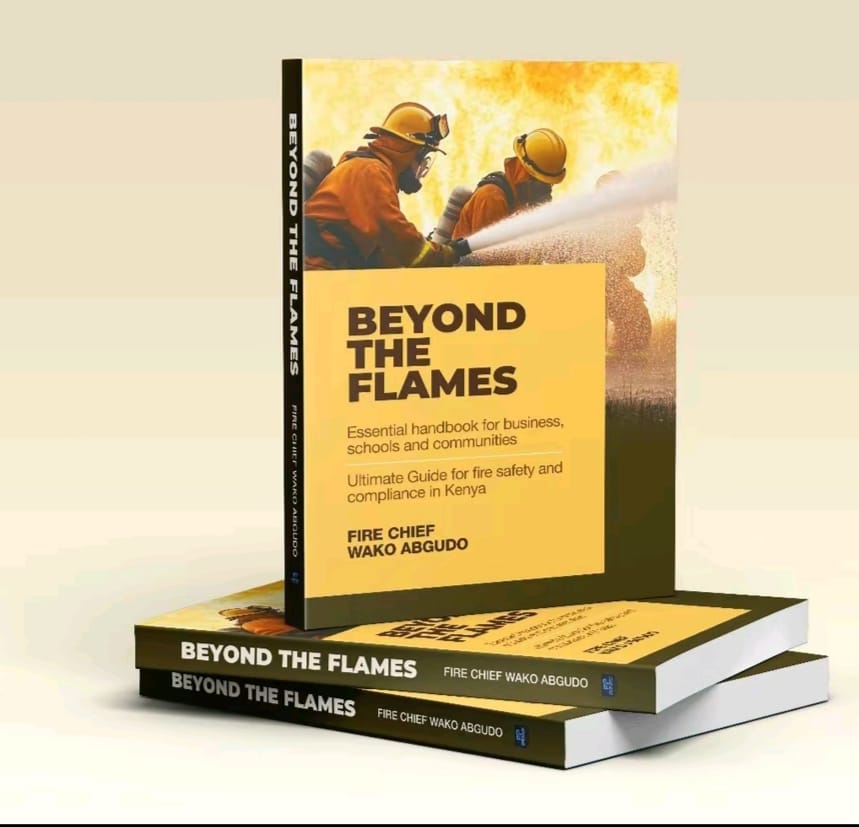
This is an important fact.
Solar panels can generate electricity when sunlight reaches them.
Therefore, switching off one part of a building’s electrical supply does not necessarily remove every solar hazard.
As a result, people should never touch damaged solar cables or panels during an emergency.
Do not walk on damaged panels.
Do not cut solar cables.
Instead, keep away and tell trained responders about the solar system.
If smoke comes from a solar panel, inverter, battery or cable, take immediate action.
First, warn everyone nearby.
Next, evacuate people from the danger area.
Then, call emergency responders.
If you have proper training and the system provides a safe emergency shutdown procedure, follow that procedure only when you can do so without exposing yourself to danger.
However, never touch exposed wires.
Never open a battery enclosure.
Never attempt repairs during a fire.
Above all, protect human life.
A battery fire requires serious caution.
First, move people away.
Next, raise the alarm.
Then, contact emergency responders.
Tell them that a solar battery is involved.
If you know the battery type, provide that information.
Also, tell responders where the battery is located.
For example:
“The solar battery is inside the electrical room behind the building.”
This information can help responders prepare for the incident.
However, never enter the danger area to obtain information.
Never:
Instead, evacuate and wait for trained responders.
Fire extinguishers can help control some small fires.
However, the correct extinguisher depends on the material involved.
Electrical equipment creates shock hazards.
Battery fires may create additional thermal and chemical hazards.
Therefore, businesses, schools, hotels and institutions should complete a fire risk assessment.
They should also provide suitable firefighting equipment and train staff.
Most importantly, never allow an extinguisher to delay evacuation when a fire becomes dangerous.
When firefighters arrive, give them clear information.
Tell them:
Furthermore, keep bystanders away.
Do not crowd firefighters.
Do not block fire engines.
Do not enter the operational area to record videos.
Instead, give responders room to work.
Solar emergencies can create several hazards at the same time.
First, solar panels may continue generating electricity in sunlight.
Second, batteries can store electrical energy.
Third, damaged cables can create shock hazards.
Fourth, battery failures can produce intense heat and smoke.
Finally, some battery incidents can produce renewed heating after the first visible flames disappear.
Therefore, firefighters must assess the incident carefully.
The public should never interfere with their operations.
Every family should ask:
If you identify a serious problem, take action.
Do not wait for smoke or flames.
School management should check:
Furthermore, schools should practice evacuation drills.
Mosque management should check:
In addition, mosque leaders can teach basic solar safety during community gatherings.
Hotel managers should check:
Business owners should check:
Children need simple instructions.
Therefore, parents and teachers should teach them:
Do not touch solar cables.
Do not play near batteries.
Do not touch electrical panels.
Do not play with chargers.
Do not touch hot or swollen batteries.
Tell an adult when you see smoke or sparks.
Leave the building during an evacuation.
Never hide during a fire.
These simple lessons can protect children.
Kenya’s solar industry continues to grow.
Therefore, public safety education must grow alongside it.
Communities need simple information.
Schools need practical training.
Businesses need maintenance plans.
Hotels need trained staff.
Mosques need emergency procedures.
Families need safe charging practices.
Firefighters need awareness of modern energy-storage hazards.
Furthermore, installers should explain safety procedures to customers.
People should know where their batteries are located.
They should know how to identify warning signs.
They should know whom to contact when equipment develops a fault.
Solar fires in Kenya should not make people afraid of solar power.
Instead, they should encourage safer solar use.
Solar power can support education.
It can support businesses.
It can improve communication.
It can provide lighting.
It can help farmers.
It can support healthcare.
However, users must respect electrical energy.
Therefore, every solar installation needs good design, safe installation, regular maintenance and responsible use.
Kenya is embracing solar energy.
That is a positive development.
However, we must also embrace solar fire safety.
A solar system should provide useful energy without creating unnecessary hazards.
Therefore, choose qualified installers. Use suitable equipment. Protect cables. Maintain batteries. Keep charging areas safe. Avoid overloading systems. Watch for warning signs. Keep combustible materials away from electrical equipment.
If smoke or flames appear, act quickly.
Raise the alarm.
Call emergency responders.
Evacuate people.
Keep away from damaged electrical equipment.
Tell firefighters that solar equipment or batteries are involved.
Never risk your life to save a phone, battery, inverter, solar panel or other property.
Most importantly:
Prevent the fire before you have to fight the fire.
Solar energy can help power Kenya.
Safe solar energy can help protect Kenya.
And every Kenyan has a role in making that happen.
