
What to do before firefighters arrive in Kenya can save lives, protect homes and reduce the damage caused by fire. When a fire starts, every second matters. Therefore, families, schools, businesses and communities must know what to do during the critical minutes before professional help arrives.
In Kenya, an emergency response may be affected by distance, traffic, road conditions, difficult access, communication problems, equipment availability and other challenges. However, people should never wait for a fire to become large before asking for help.
The first response should always focus on people.
Raise the alarm. Call for emergency help. Evacuate safely. Keep access routes clear. Then provide firefighters with useful information when they arrive.
The National Disaster Management Unit lists 999, 911 and 112 as emergency numbers in Kenya. The National Police Service also publishes these numbers for emergency assistance. Therefore, every family, school and business should save them before an emergency occurs.
This article explains what to do before firefighters arrive in Kenya, especially when a fire is growing and professional help is still on the way.
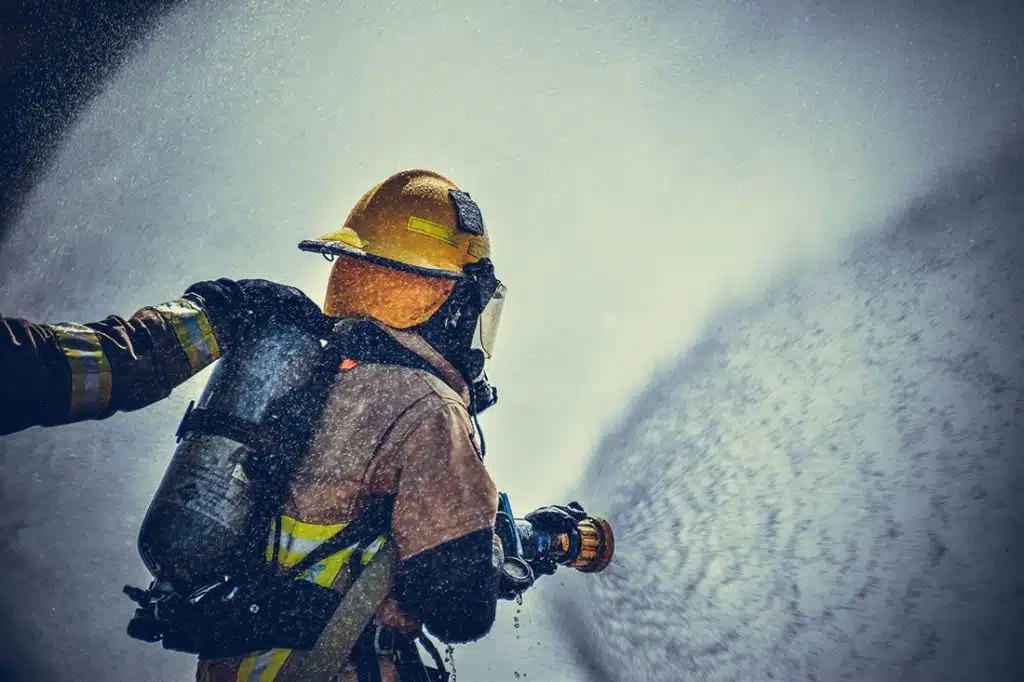
A fire can grow faster than many people expect.
For example, a small kitchen fire can spread to cabinets, curtains and other materials. Similarly, an electrical fire can damage wiring and spread into walls or ceilings. In a shop, burning stock can produce intense heat and thick smoke. In a warehouse, large amounts of combustible material can make the situation even more dangerous.
Therefore, people should never assume that a small flame will remain small.
At the same time, smoke can become dangerous very quickly. Consequently, the priority should be to protect human life rather than property.
A television can be replaced.
Furniture can be replaced.
Documents can sometimes be replaced.
A human life cannot.
The first action is simple.
Raise the alarm.
Shout:
FIRE! FIRE! FIRE!
Tell everyone nearby.
If the building has a fire alarm, activate it. If it has a manual bell, gong or other warning system, use it.
Furthermore, do not assume another person has already reported the fire.
This mistake can waste valuable minutes.
For example, one person may see smoke and assume the security guard has called. The security guard may assume a tenant has called. Meanwhile, everyone is waiting while the fire continues to grow.
Therefore, if you discover a fire, act immediately.
After raising the alarm, call for emergency assistance.
Kenya’s National Disaster Management Unit publishes 999, 911 and 112 as emergency numbers. The National Police Service also lists 999, 112 and 911 as emergency hotlines.
Save these numbers on your phone today.
Do not wait for an emergency.
Do not depend on searching the internet during a fire.
Do not waste time asking neighbours for the number.
Instead, save emergency contacts under simple names such as:
FIRE EMERGENCY
EMERGENCY
POLICE
In addition, businesses and institutions should display emergency numbers in visible locations.
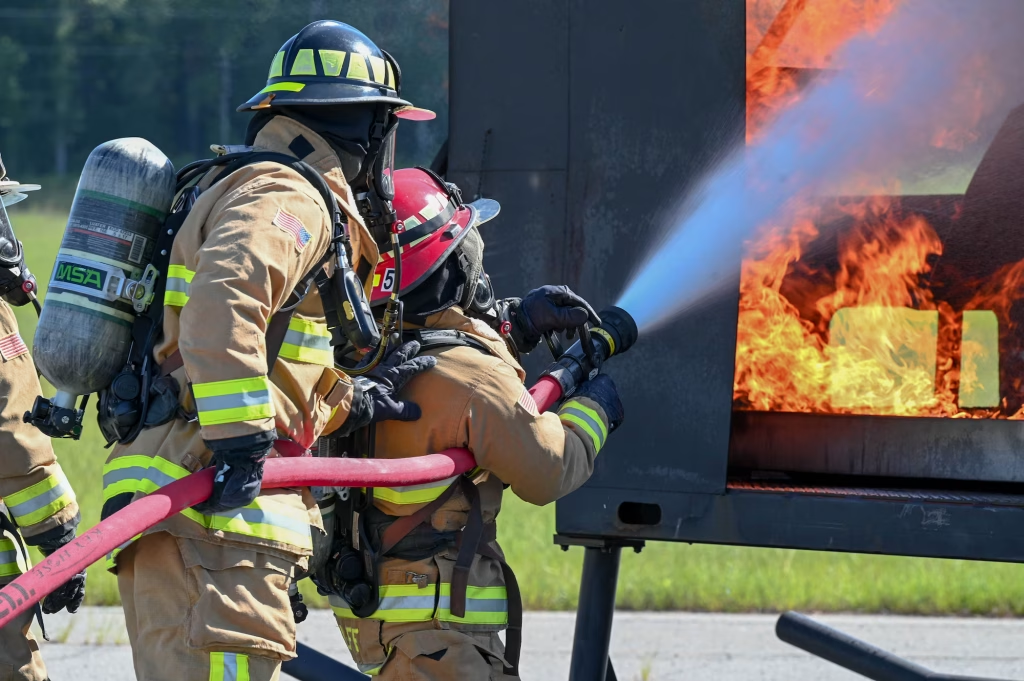
When calling for help, location is extremely important.
Do not simply say:
“There is a fire in Nairobi.”
That information is not enough.
Instead, explain:
For example:
“There is a fire at a three-storey residential building near the main market. The fire appears to be on the second floor. There may be children inside.”
This information can help emergency services understand the situation.
Moreover, if the building is difficult to find, give a nearby landmark.
For rural areas, provide the village name, road, trading centre, school, church, market or other recognizable location.
This is one of the most important lessons for the public.
Some people see a small fire and decide to fight it before calling for help.
That can be dangerous.
A person may believe:
“I can control it.”
However, the fire can suddenly grow.
Therefore, call for help first.
If the fire is very small and you are trained to use the correct extinguisher, you may attempt to control it only if you have a clear escape route and the situation remains safe.
Otherwise, evacuate.
Your life is more important than saving property.
Once the alarm has been raised, begin evacuation.
Help people move away from danger.
Pay special attention to:
Furthermore, give clear instructions.
Do not create unnecessary panic.
Tell people where to go.
If one exit is blocked by smoke or flames, use another safe exit.
Never use a lift during a building fire.
Instead, use stairs or an approved emergency exit.
Once you are outside, stay outside.
Do not return to collect your phone, money, clothes, documents or other valuables.
Smoke can be one of the greatest dangers during a fire.
It can reduce visibility and make it difficult to breathe.
Therefore, if smoke is present, move toward a safe exit while staying as low as reasonably possible.
However, do not crawl into an area where you may become trapped.
If your normal exit is blocked, use another safe route.
Above all, do not enter thick smoke to rescue property.
If someone is trapped, tell firefighters where the person was last seen.
For example:
“My child was last seen in the bedroom at the back of the house.”
That information may help professional rescuers plan their approach.
When leaving a room or building, closing a door behind you may help slow the movement of smoke and fire.
However, do not delay your escape just to close a door.
First, get yourself and others to safety.
Then, if it is safe, close doors without locking people inside.
This simple action can sometimes help reduce the movement of smoke between areas.
Nevertheless, evacuation remains the priority.
Firefighters need space to reach the incident.
Unfortunately, emergency vehicles can face difficult access in busy areas.
Traffic can slow response.
Parked vehicles can block entrances.
Crowds can make movement difficult.
Narrow roads can create additional problems.
Therefore, the public has an important role.
Move vehicles away from emergency access points when it is safe.
Keep gates and entrances clear.
Do not park directly in front of buildings.
Do not stand in the road filming the fire.
Do not follow emergency vehicles.
Instead, create space.
A clear access route can help firefighters reach the fire more efficiently.

In some areas, the address may not be easy to find.
This can happen in informal settlements, rural areas, large estates, industrial zones and places with unclear street names.
Therefore, if it is safe, send a responsible adult to a visible location near the main road.
The person can guide emergency responders toward the correct building.
For example, they can stand near a recognizable junction or landmark.
However, they must stay away from the fire.
Their job is not to fight the fire.
Their job is to help emergency responders find the location.
When firefighters arrive, give them accurate information.
Tell them:
This information can be extremely useful.
However, never invent information.
If you are not sure, say that you are not sure.
Accurate information is better than guesses.
Fire response is not controlled by one person.
It is a system.
Several factors can influence emergency response.
These include:
Therefore, it is unfair and unhelpful to blame firefighters automatically when a response takes longer than expected.
Firefighters may be responding to another emergency.
A fire engine may be far away.
A road may be blocked.
A building may be difficult to reach.
Equipment may also need to be deployed carefully.
At the same time, Kenya must continue strengthening fire services, emergency infrastructure, public education and response capacity.
One major problem is delayed reporting.
Imagine a fire starts in a small shop.
The owner notices smoke.
Instead of calling immediately, they first try to remove stock.
Then they call a relative.
Then they search for an extinguisher.
Then they ask neighbours for help.
Only later does someone contact emergency services.
By then, the fire may have spread.
Therefore, early reporting is essential.
If you see a real fire, raise the alarm and call for help immediately.
Do not wait to see how large the fire becomes.
Families should prepare before a fire happens.
First, save emergency numbers.
Next, discuss escape routes.
Then, choose an outdoor meeting point.
After that, teach children what to do.
Children should know:
In addition, parents should explain that firefighters are there to help.
Children should never hide from firefighters during an emergency.
People living in apartments should understand their building.
Before an emergency, ask:
Where are the stairs?
Where are the emergency exits?
Where is the assembly point?
Where are the fire extinguishers?
Where is the fire alarm?
Can emergency vehicles reach the building?
Are corridors clear?
Are stairways blocked?
Is the main gate accessible?
These questions are important because confusion during an emergency can cost time.
Therefore, tenants should ask landlords or property managers about fire safety arrangements.
Landlords and property managers have an important role in protecting residents.
They should keep escape routes clear.
They should maintain fire safety equipment.
They should address dangerous electrical conditions.
They should ensure that emergency exits can be used.
They should provide clear emergency information.
They should also make sure residents understand basic evacuation procedures.
A fire extinguisher alone does not make a building safe.
Instead, fire safety requires a complete system.
Businesses can suffer enormous losses when a fire spreads.
A shop can lose its entire stock.
A restaurant can lose kitchen equipment.
A warehouse can lose products.
A factory can lose machinery.
An office can lose computers and records.
A hotel can lose rooms and equipment.
Furthermore, a business may stop operating after the fire.
Workers can lose income.
Customers may move to competitors.
Suppliers may lose business.
Therefore, business owners should invest in fire prevention and emergency preparedness.
Every business should know its emergency contacts.
Employees should know evacuation routes.
Fire extinguishers should be suitable and accessible.
Electrical systems should be maintained.
Combustible materials should be stored safely.
Emergency access routes should remain clear.
Schools need strong fire emergency plans because many children may be inside one building.
Teachers should know the evacuation procedure.
Students should understand the alarm.
The school should have an assembly point.
Staff should know how to account for learners.
Fire exits should remain clear.
Firefighting equipment should be maintained.
Emergency numbers should be visible.
Furthermore, schools should conduct regular fire drills.
A drill helps students and teachers understand what to do before a real emergency occurs.
Markets and informal settlements can face serious fire risks.
Buildings may be close together.
Electrical connections may be unsafe.
Combustible materials may be stored in small spaces.
Roads may be narrow.
Water access may be limited.
Crowds can also make emergency movement difficult.
Therefore, prevention is especially important.
Communities can identify fire hazards before an emergency.
They can keep access routes clear.
They can discourage unsafe burning.
They can educate residents about electrical safety.
They can establish clear evacuation areas.
Most importantly, they can develop a culture of early reporting.

When a fire starts, people often want to help.
That is natural.
However, helping without training can create another emergency.
Do not enter a burning building.
Do not walk through thick smoke.
Do not climb onto a burning roof.
Do not touch electrical equipment involved in a fire.
Do not approach leaking LPG cylinders.
Do not fight a fire that is spreading rapidly.
Do not enter a building that may collapse.
Instead, evacuate and wait for trained responders.
You can help by providing information and keeping other people away from danger.
Sometimes a person may be unable to leave because smoke or fire blocks the normal exit.
In that situation, stay as calm as possible.
Move to a safer area if one is available.
Close the door between yourself and the fire if possible.
Call emergency services.
Tell them your exact location.
Go to a window or other visible location if it is safe and make your location known.
Do not jump from a dangerous height.
Do not enter thick smoke.
Instead, communicate your location and wait for professional rescue if escape is impossible.
Firefighters need information.
They need access.
They need space.
They need cooperation.
Therefore, when firefighters arrive:
Move away from the working area.
Keep children away.
Do not interfere with hoses.
Do not move firefighting equipment.
Do not block the fire engine.
Answer questions clearly.
Tell responders about trapped people.
Tell them about LPG cylinders, fuel, chemicals or other hazards.
Then allow them to work.
Firefighters are trained to assess the incident and choose the safest available response.
The best fire emergency is the one that never happens.
Therefore, prevention must remain a priority.
Families can prevent fires by using electrical appliances safely.
Businesses can maintain equipment.
Farmers can control outdoor burning.
Schools can educate children.
Landlords can maintain buildings.
Communities can remove hazards.
Government agencies can strengthen fire safety systems.
NGOs can provide public education.
Fire services can train communities.
Everyone has a role.
Every family should prepare a simple plan.
Write down:
Emergency numbers: 999 / 911 / 112
Home address: __________________
Nearest landmark: __________________
Assembly point: __________________
Alternative escape route: __________________
Emergency contact: __________________
The National Disaster Management Unit confirms 999, 911 and 112 as emergency numbers.
However, families should also confirm relevant local fire service contacts for their county or town.
Keep the information somewhere everyone can find it.
Put it on the refrigerator.
Keep it near the telephone.
Save it on mobile phones.
Teach children how to use it.
During a fire, remember:
Raise the alarm.
Contact emergency services immediately.
Leave the building safely.
Help responders find the location.
Tell firefighters about trapped people and hazards.
These five actions are simple.
However, they can make a major difference during a stressful emergency.
Kenya needs strong emergency systems.
That means accessible fire stations.
It means reliable fire engines.
It means trained firefighters.
It means protective equipment.
It means water supplies.
It means emergency communication.
It also means roads that allow emergency vehicles to reach communities.
Furthermore, counties and national agencies should continue working together on disaster preparedness.
The National Disaster Management Unit describes disaster risk reduction as efforts to reduce exposure and vulnerability while improving preparedness and coping capacity.
This approach should include fire safety.
Fire prevention should not begin after a major tragedy.
It should begin during planning.
Do not make the fire engine your only fire protection plan.
Prepare before the emergency.
Train workers.
Inspect electrical systems.
Maintain extinguishers.
Keep emergency exits clear.
Display emergency contacts.
Practice evacuation.
Know the location of the nearest fire station.
Know how emergency vehicles can reach your premises.
Also, keep hazardous materials properly stored.
A few hours spent preparing can protect years of business investment.
Do not wait for smoke to fill your house before discussing fire safety.
Talk about it tonight.
Ask your children where they should go.
Ask everyone which exit they would use.
Choose a family meeting point.
Save emergency numbers.
Remove hazards around the home.
Check electrical equipment.
Keep matches and lighters away from children.
If you use LPG, follow safe storage and handling practices.
Above all, make sure everyone understands one rule:
When a fire starts, get out and stay out.
During an emergency, do not focus first on saving property.
Focus on people.
First, raise the alarm.
Second, call emergency services.
Third, provide the correct location.
Fourth, evacuate.
Fifth, help vulnerable people if you can do so safely.
Sixth, keep emergency access clear.
Seventh, tell firefighters about trapped people and hazards.
Finally, stay away from the danger zone.
These steps can help reduce confusion while professional responders are travelling to the scene.
Kenya needs strong firefighters.
Kenya also needs strong fire prevention.
Professional firefighters cannot prevent every fire alone. They need the public to report emergencies quickly. They need clear access routes. They need accurate information. They need communities that understand evacuation.
Therefore, fire safety must become a shared responsibility.
When a fire starts, do not wait.
Raise the alarm.
Call for help.
Give the correct location.
Evacuate.
Keep roads clear.
Guide emergency responders when safe.
Tell firefighters about people who may be trapped.
Never risk your life for property.
The National Disaster Management Unit and National Police Service currently publish 999, 911 and 112 as emergency numbers, so Kenyan families should save these contacts and confirm any local fire-service numbers relevant to their area.
The public also has a role in building a safer Kenya.
At Mama Kabale Fire Safety Foundation, our message is simple:
Prevent the fire before you have to fight the fire.
Prepare today.
Call early.
Escape safely.
Help others without putting yourself in danger.
And remember:
A firefighter can help you faster when you report the fire faster.
